
This website uses affiliate links that may earn commission from purchases. This is at no additional cost to you.
I’ve spent over a decade perfecting my dad’s Filipino Pork Adobo Recipe. Now he says he follows MY recipe to make the best adobo!
There are countless adobo family recipes, and everyone will have their preference. I prefer to have adobo that isn’t too salty, and strikes the perfect balance between the soy sauce to vinegar ratio.
↓ Jump to Recipe ↓My Filipino Pork Adobo recipe relies on using a measuring cup so that you’ll be able to replicate the flavor every time you cook this recipe. The type and brand of soy sauce and vinegar will also have a major impact on your adobo’s flavor.
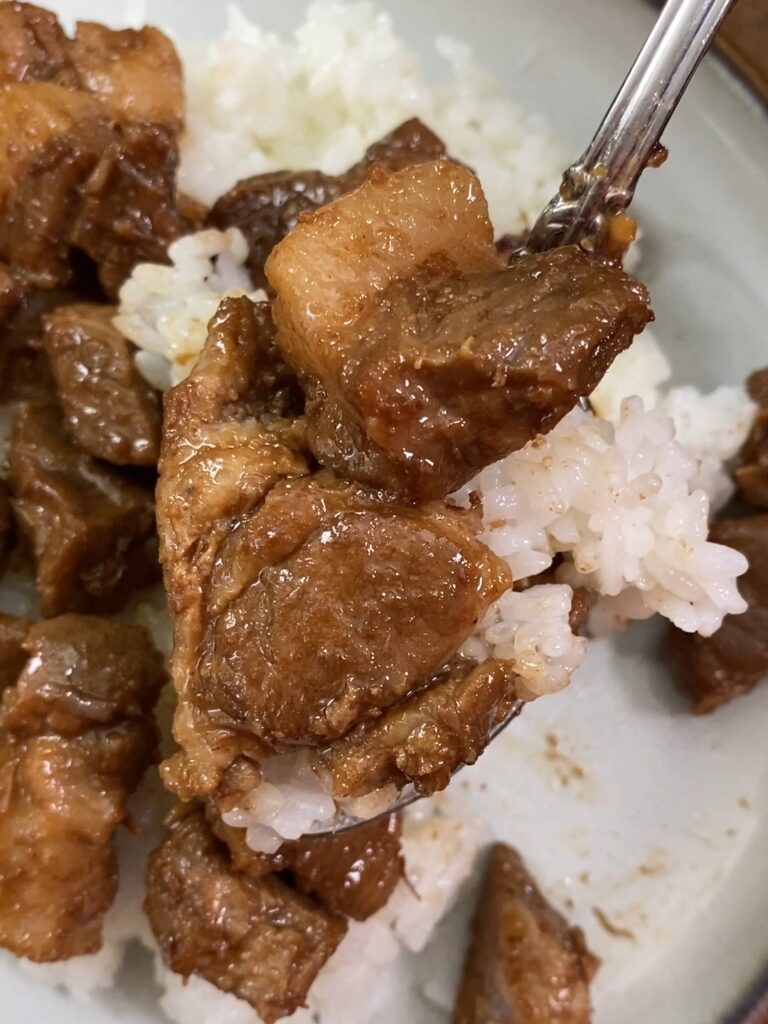
When I left home for college, I was sick of this easy-to-make Filipino staple dish. However, after a few months, the craving hit. I NEEDED my vinegar & soy sauce stew.
I first tried to make it from instinct but when it came out a little flat (and way too salty), I called my dad. He said to add more vinegar, not soy sauce. Over the years I haven’t adjusted the recipe too much. Instead, I relied on the ratio of the soy sauce to vinegar as my guide.
Ask any of my friends or family members who have tried my pork adobo, they’ll say it’s THE BEST. And somehow I can never make enough! I take pride in making really good adobo to represent my culture.
Adobo Variations
Adobo is considered the national dish of the Philippines, and every household makes their adobo differently. Each region also has their own special versions of adobo that don’t use soy sauce.
The adobo recipe I have here is what I consider the most commonly known adobo with a base of soy sauce and vinegar. There are actually a LOT of other variants that are commonly tied to other regions.
One example is adobo sa gata which comes from the Bicol region of the Philippines. The Bicol version is famous for adding coconut milk and chili peppers.
What Ingredients Do You Need for Pork Adobo
My pork adobo recipe has very few ingredients:
- pork shoulder or pork belly
- soy sauce
- vinegar, preferably apple cider, coconut, or sugarcane
- whole black peppercorns
- garlic
- bay leaves
In addition, you’ll most likely want to eat rice with your adobo. Don’t forget to cook rice before you start this recipe!
You can also substitute any protein for the pork, with chicken being one of the more popular variants. Other additions I like to add are quail eggs. I love the little bit of texture difference these give to the dish, and helps add more protein. You can find my chicken adobo recipe here.
Some adobo recipes might call for sugar, but I don’t use it since I’m using a specialty vinegar instead of distilled vinegar. Feel free to add a little bit of brown sugar if you’re stuck using distilled vinegar, or simply want sweeter flavor.
What Vinegar Should You Use In Pork Adobo?
You can use all kinds of vinegar (white distilled vinegar, rice vinegar, e.g.) in your adobo and it will turn out just fine. However, I strongly recommend using a “sweet” vinegar.
My go-to is apple cider vinegar, but get creative and adjust to your taste! Just remember that the vinegar is going to be the biggest contributor to the overall flavor of the dish.
One of the best adobo dishes I ever made actually used a pineapple vinegar from a Korean brand. It was sweeter than any other vinegar I had used before and gave such a nice, bright flavor to the dish!
What Is the Right Soy Sauce to Vinegar Ratio?
If you’re using typical Kikkoman or Kikkoman Low Sodium soy sauce, I recommend 1:1 ratio soy sauce to vinegar with a few extra splashes of vinegar. My recipe calls for 1/2 cup soy sauce and 1/2 cup + 2 tablespoons of vinegar but I would recommend adjusting to your taste. Some people love a very sour adobo while others enjoy it more balanced.
However, if you’re using a saltier soy sauce (like Silver Swan soy sauce), I recommend a 1:1.5 soy sauce to vinegar ratio. You’ll need more vinegar to brighten up the saltiness of the soy sauce.
What kind of Pork Should I Use?
I prefer using pork belly or pork shoulder. Pork shoulder is my top pick because you’ll get both lean and fat parts of the pork, without it getting too fatty.
Pork belly tends to have a LOT more fat, which will make its way into your adobo stew and create a richer, fattier final dish. But if my friends or family members ask me to make it with pork belly, I’ll make the exception and use pork belly instead of pork shoulder.
How to Make Super Tender Pork Adobo
The best way to ensure the pork in your adobo is tender is to cook it for at least 45 minutes. Sometimes I’ll need to cook it for 60 minutes or more to reduce the sauce, but pork belly and pork shoulder will get even more tender with extra time.
For maximum flavor, leave the stew to sit in the fridge overnight! My adobo always tastes better when its been sitting in the fridge overnight, since the vinegar helps to break down some of the tougher bits of the protein and the meat will continue to marinade in the sauce. I find it to be more flavorful and more tender.
I know it’s difficult not to eat the pork adobo right away, so make extra to have enough to store for the next day 🙂
What to Do With Leftover Pork Adobo
If you want the adobo to taste extra yummy, let the adobo rest for 24 hours. Remove the pork from the (now gelatinized) adobo sauce and fry on medium heat. This will lock in the flavors and give the pork a nice fried texture. Then cook down the remaining adobo sauce and pour it over the fried pork and rice.
If you’re lazy, you can reheat the adobo using the microwave or on the stove.
You can save any leftover adobo in the fridge for a decently long amount of time. Just keep in an airtight container for up to 3 days. (Personally I push that time period, but for food safety purposes I have to say 3).
You can also store in the freezer…pretty much until you don’t want to eat it due to freezer burn. But I don’t know why you’d leave it in there for that long, this dish is super good.
How to Make Filipino Pork Adobo
Pork adobo is generally straight forward: brown the pork, then add the rest of the ingredients: garlic, black peppercorn, vinegar, soy sauce, and bay leaves. Simmer for as long as you can wait (minimum 1 hours) and then serve with white rice and veggies. Full recipe and ingredients list is below.
Prep your ingredients! Cube pork and smash garlic.
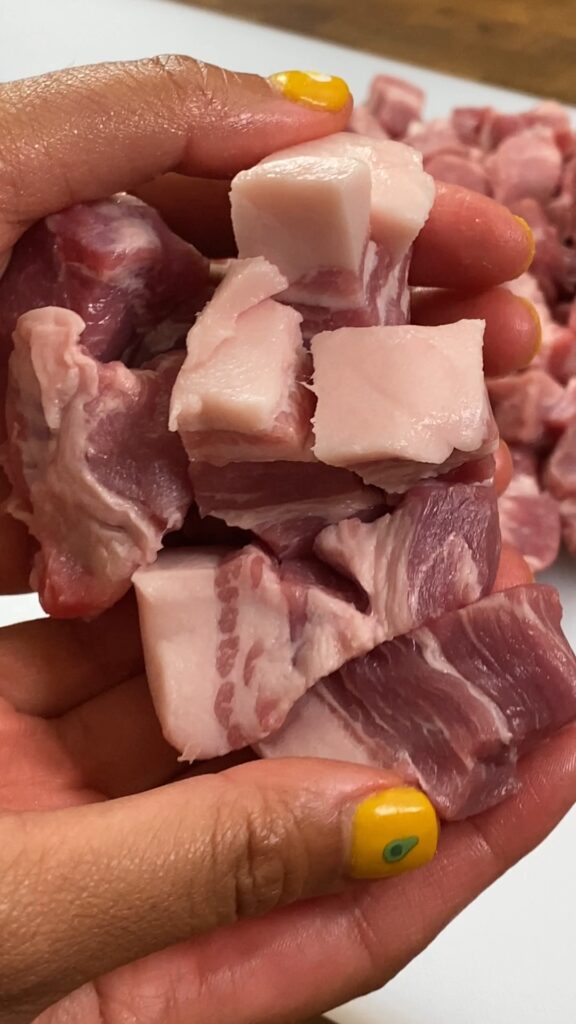
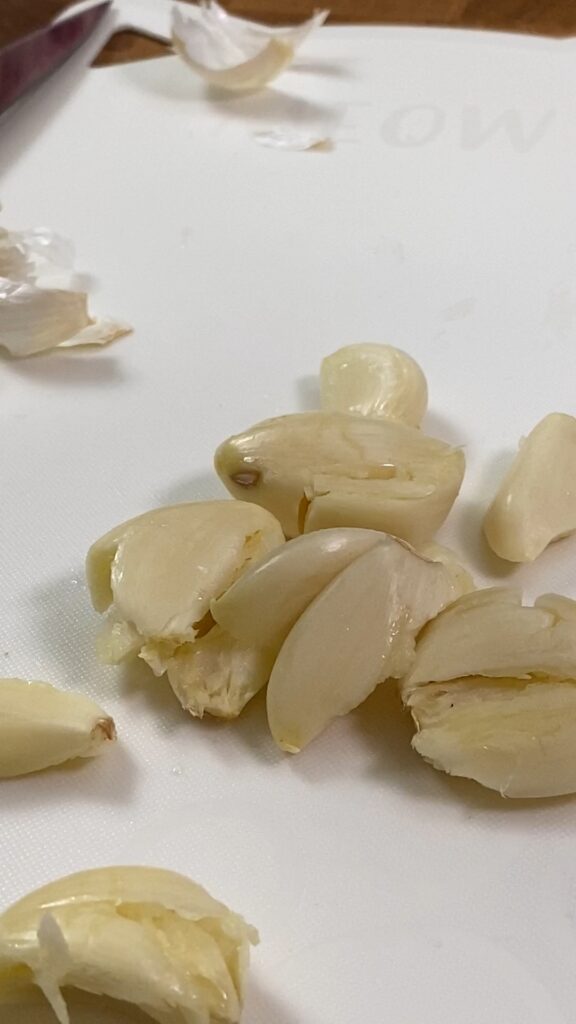
In a large pot, brown the pork. When using pork shoulder or pork belly, some fat will render onto the pan. Remove the pork and use the oil to sauté the garlic and peppercorns (yes the peppercorns stay whole) to bring out their flavors.
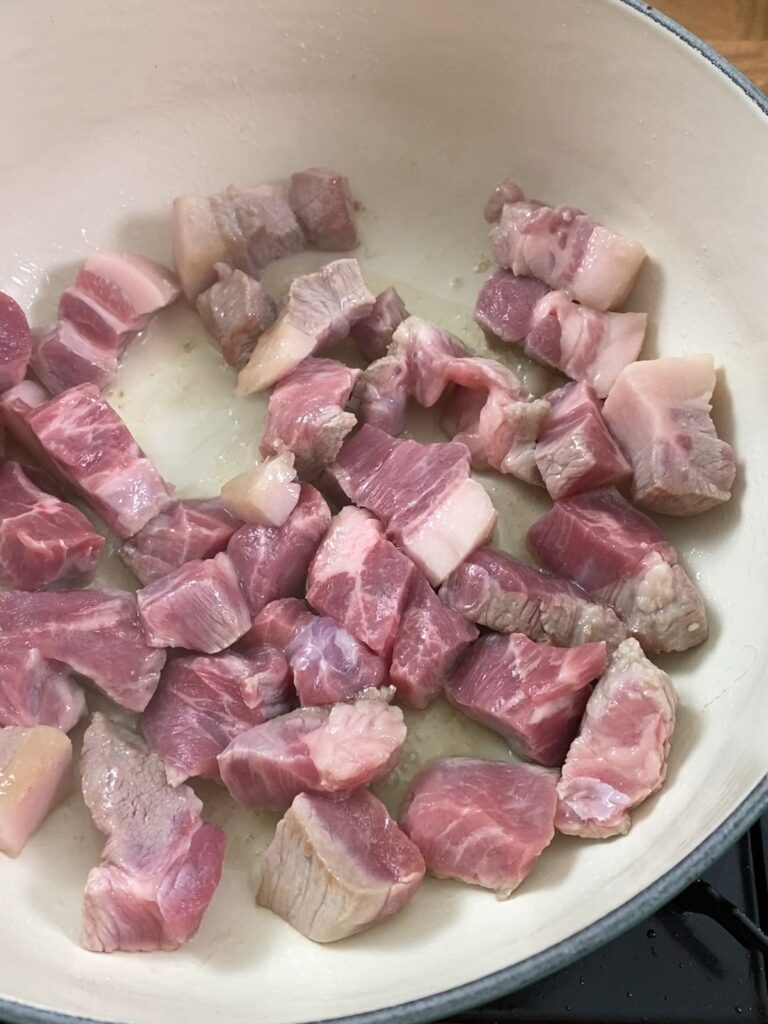
Add the rest of the ingredients and bring to a boil. Once it boils, bring the heat to a simmer. Cover the pot with a lid and allow to simmer for 30-45 minutes.
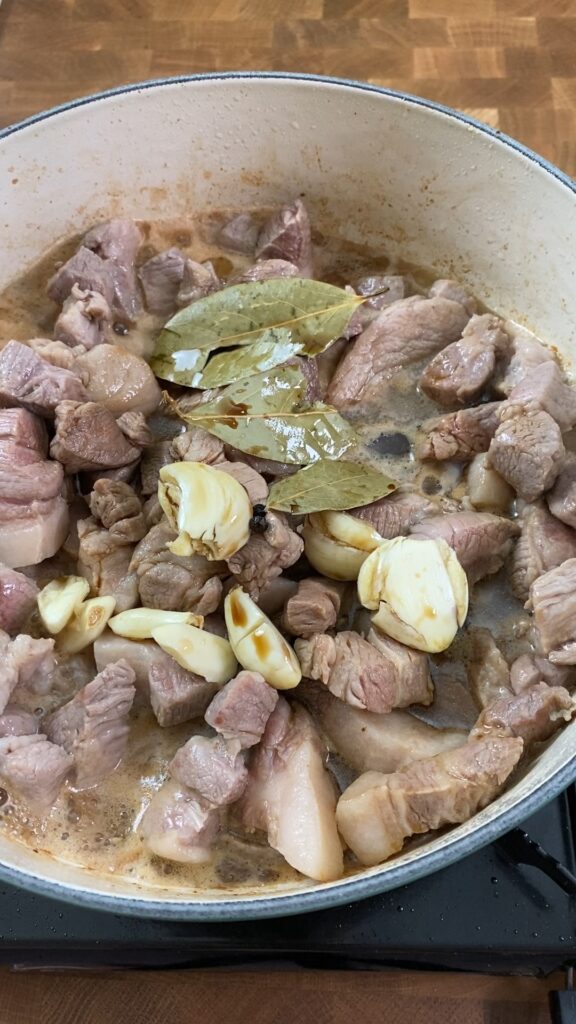
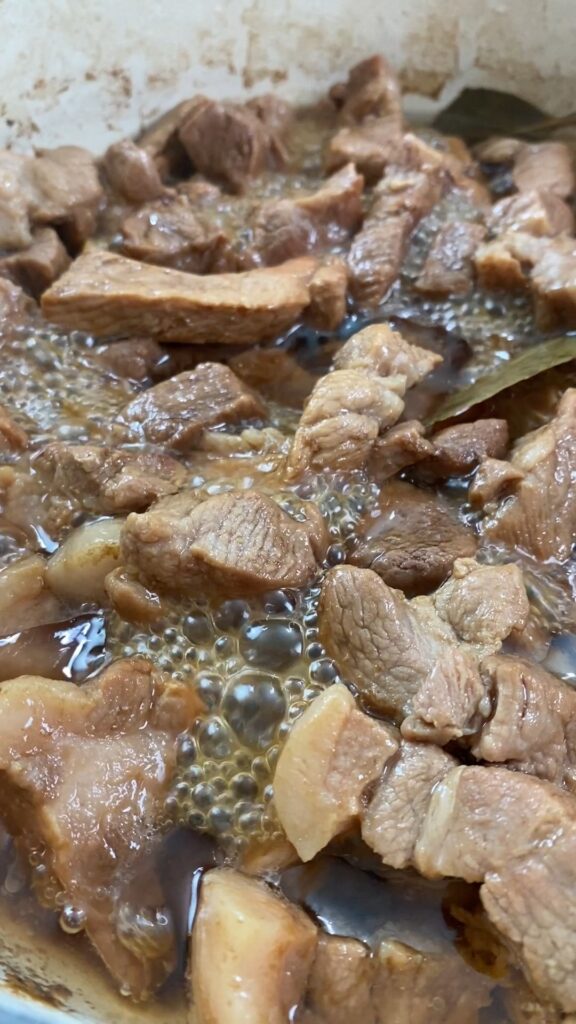
Remove the lid and allow the sauce to reduce for another 10-15 minutes, until the sauce slightly thickens.
If you simmer it for even longer, the soy sauce and vinegar will fully evaporate and you’ll end up with “dry adobo”, which just looks like pork in oil. Don’t worry, the flavors of adobo are still infused within the pork and the oil – this will still taste great.
I highly recommend to let the adobo sit overnight to allow the meat to continue tenderizing in the vinegar, and to sit in the marinade to soak up all the flavor. If you absolutely can’t wait overnight, you can serve it now.
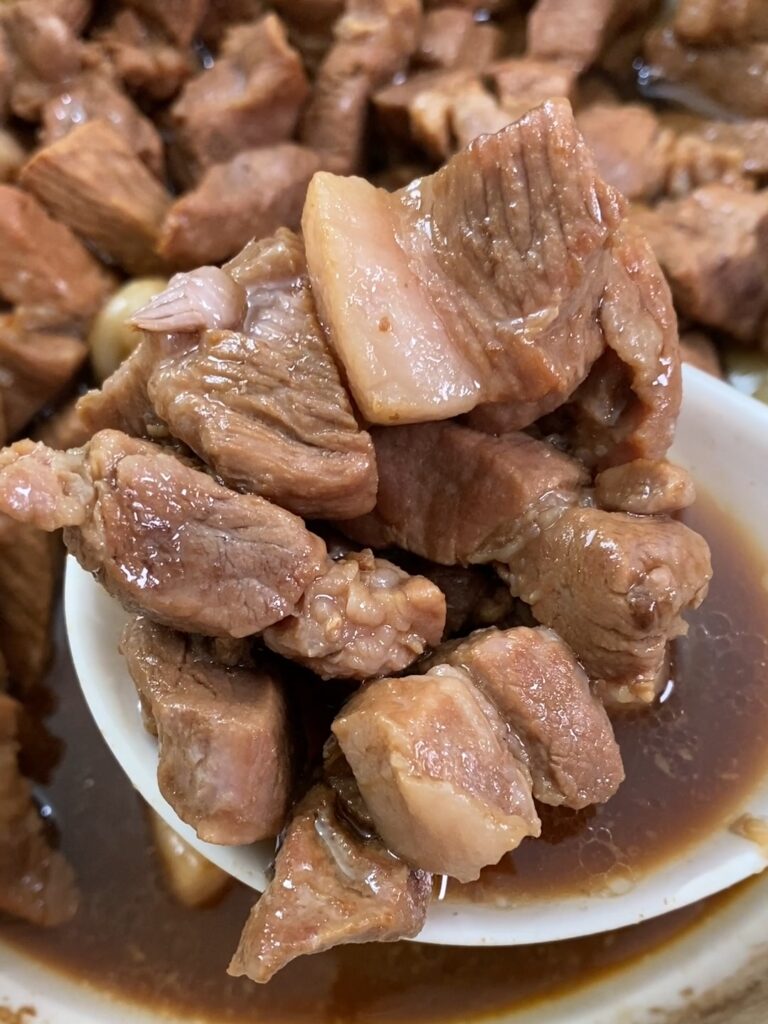
Serve with white rice and enjoy!
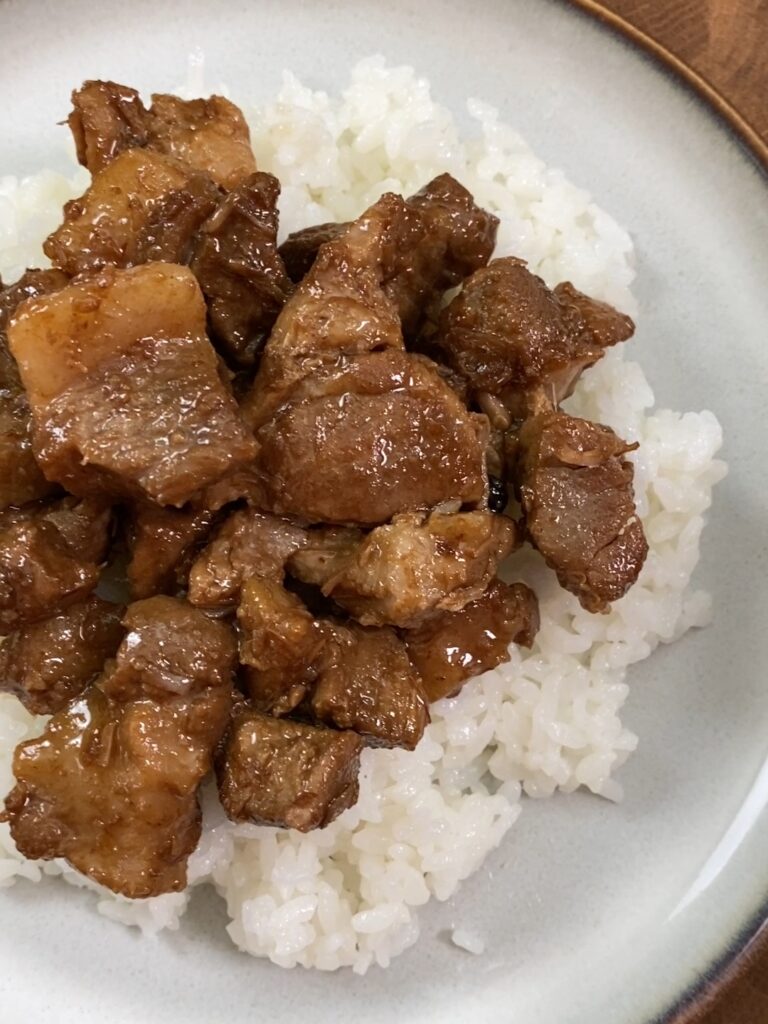
Why Is My Pork Adobo Soupy/Liquidy?
I get this comment SO often on this recipe and my answer is that there are so many different types of adobo, some regional like the adobong sa gata or coconut milk adobo or even Mexican adobo. I make this adobo my own way and I’m sure it isn’t how everyone is used to adobo.
I also don’t use ingredients found in other recipes. I’ve seen others use salt, brown sugar, onion, or even oregano. I’ve had recipes with some of these ingredients and they’re good! However, I prefer the savory and tangy sauce from simply soy sauce, and vinegar (and the aromatics of course).
Recipe
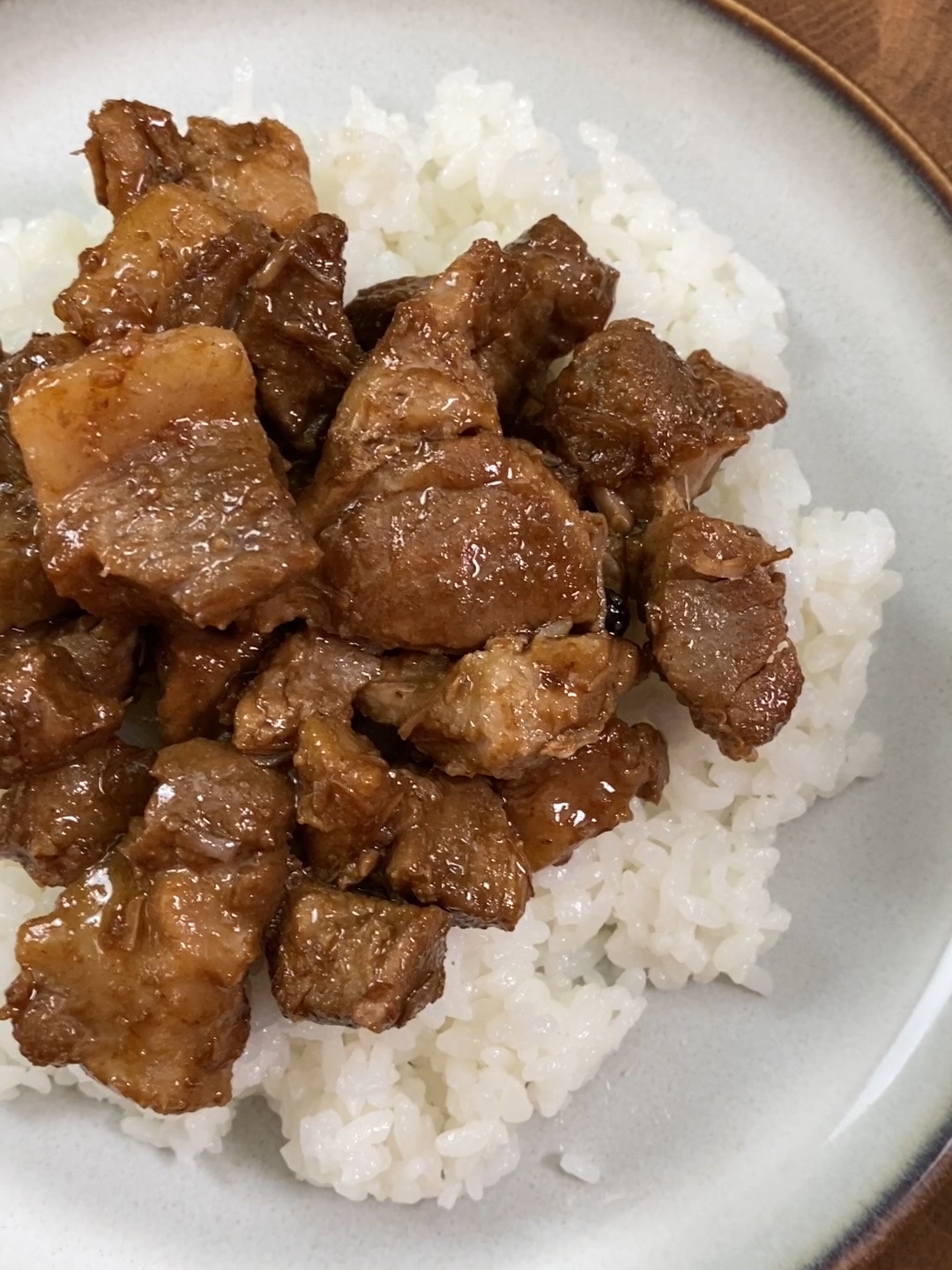
Filipino Pork Adobo
Ingredients
Method
- Chop the pork into medium-sized cubes (keep in mind they will shrink when cooked). Crush garlic and remove the peel.
- In a large oiled and heated sauce pan, brown the cubes of pork. You may have to do this in batches. Remove the pork from the pan and set aside in a separate bowl.
- To the pan, add the crushed garlic and peppercorns. Sauté for a couple of minutes or until the garlic appears glossy.
- Add bay leaves, apple cider vinegar, soy sauce, and pork. Bring the pot to a boil, then lower to a simmer. Cover the pot with a lid and simmer over low heat for 45 minutes.
- Remove the lid and allow the sauce to reduce until slightly thickened (it doesn't get too thick). This may take 15-20 minutes.
- Once thickened, remove from the heat. Serve with rice, and enjoy!
Notes
What vinegar is best for pork adobo?
You can use any vinegar, even white distilled vinegar, but I highly recommend specialty fruit vinegars. This recipe calls for apple cider but I once had a pineapple vinegar that made the adobo so tasty! Keep in mind that vinegars taste different so adjust accordingly. Same goes for soy sauce.Can I use chicken instead of pork?
Yes! You can use chicken instead of pork. You can use any protein for that matter. The recipe is pretty much the same but if you want step-by-step instruction you can use my chicken adobo recipe.How long does Filipino pork adobo last in the fridge?
If kept in the fridge, I’d say you can reheat it up to 1 week after cookingIs pork adobo better the next day?
I encourage everyone to eat adobo the day after as it gives the dish a richer flavor.Other Recipes
As mentioned above there are loads of Filipino adobo variations.
- Adobong sa Gata is adobo with a coconut milk base.
- Chicken Adobo is another classic. Its just harder to keep moist.
- Do you like SPAM musubi? Try pork adobo musubi!
If you’re looking for other Filipino recipes, I’ve got you covered
Sinigang Recipe. Another famous Filipino dish. A beautifully sour soup loaded with with veggies.