
Filipino bread rolls (the best bread rolls in the world…in my opinion!)
↓ Jump to Recipe ↓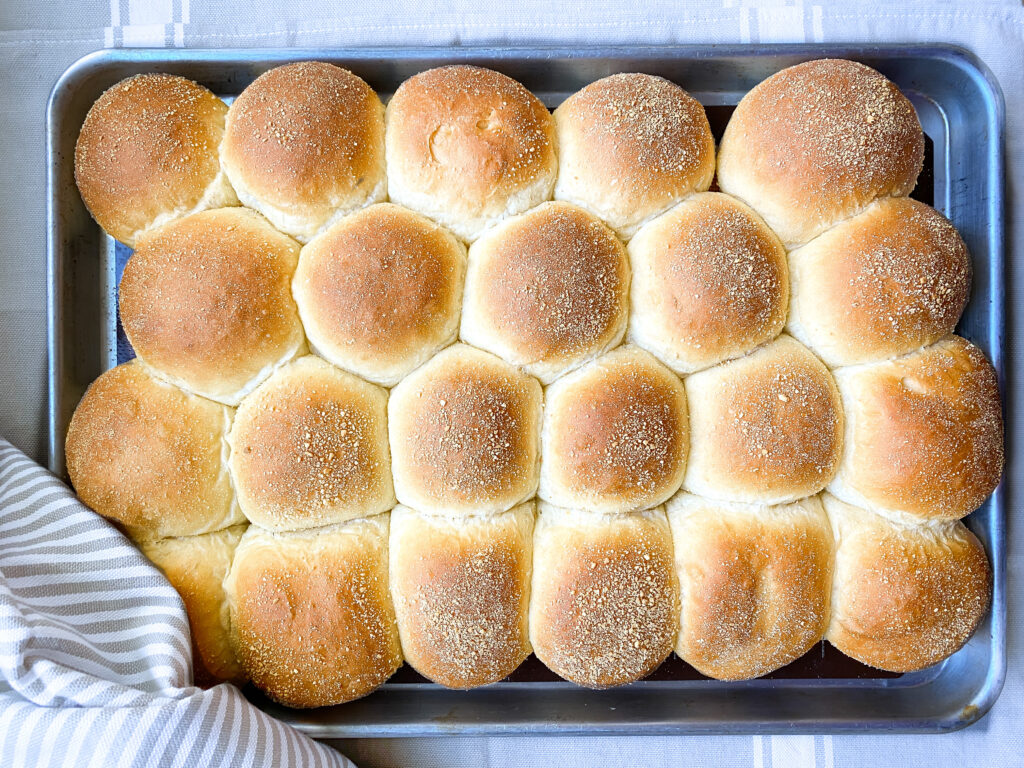
[ Check out my Ube Coconut “Hawaiian Rolls” recipe which uses this as a base! ]
“This is the best pandesal I’ve ever had”
I’ve gotten this a number of times from family and friends who I’ve had the pleasure of sharing this pandesal recipe with. A few of them were born and raised in the Philippines, which makes me feel extra warm and fuzzy inside.
It’s a big deal for me to be able to replicate a nostalgic recipe, or make it even better than what they remember growing up in the Philippines.
I know this pandesal, or pan de sal, recipe is probably not exactly how the pandesal vendors in the Philippines make it because of the ingredients available to them versus the ingredients I have available here.
There’s just some things you can’t directly mimic, but I’m just ecstatic to know that my fellow Filipino and Filipinas LOVE this recipe!
I’ve been making pandesal for a couple of years now, and I wish I could show you my first batch of pandesal. They had pale tops, and not as fluffy and soft as I have them now.
Basically, I’m telling you to make this recipe, then make it again. By the time you’ve made your 10th batch, you’ll notice the improvement in your baking skills and your confidence around baking bread!
What is Pandesal?
Pandesal is a Filipino milk bread. Its Spanish name is literally translated to “salt bread” but that is misleading as the bread is sweet. While it can come in many shapes and sizes, pandesal is usually shaped into round rolls and has very fluffy interior.
Pandesal is commonly eaten with breakfast. You can find bakeries in the Philippines slinging bags early in the morning and it is relatively cheap. Cheap enough to buy it fresh whenever you want it.
Pandesal isn’t a complicated bread. Maybe its the nostalgia, but I think pandesal is the best milk bread I’ve ever had.
What Do You Eat with Pandesal?
As I mentioned above, pandesal is traditionally a breakfast bread. Most Filipino’s I know eat pandesal on its own or dipped in a hot morning beverage (hot chocolate, coffee, etc.). However, you can eat it with practically anything you would with a common western roll.
I love it with just plain unsalted butter or with peanut butter + jam. I’ve also used it as the bread for breakfast sandwiches like egg sandwich or even with spam, egg, and cheese. To be honest, whatever you think might taste good with pandesal probably will!
Where Can I Buy Pandesal?
If you live in the USA like me, you can find pandesal sold at any Filipino supermarket. If you’re lucky, the supermarket will bake it fresh there or have a chain bakery inside like Goldilocks or Valerio’s. Otherwise, they will stock a local bakery’s product on the shelves.
I will admit, I sometimes just buy pandesal because it is convenient and I am at the store. However I strongly urge you to make it at least once yourself to see how easy it can be! Fresh pandesal still hot from the oven is really really really really hard to beat.
What Are the Ingredients for Pandesal?
Pandesal ingredients are flour, sugar, salt, yeast, milk, eggs, butter, and (in this recipe) powdered cream crackers.

My pandesal recipe uses only all-purpose flour. This gives it a light and airy texture when properly proofed and baked. Some other recipes call for bread flour. This gives it a chewier and denser texture which some people prefer!
You’ll notice I mention powdered “cream crackers” as an ingredient. This is the specific Diamond Bakery Cream Cracker that I am able to reliably source from Hawai’i. These are deliciously sweet brown crackers. The closest thing to it would be a Marie biscuit or English tea biscuit. If you can’t find any of these, you can use just plain bread crumbs.

How Do You Make Pandesal?
Full recipe and ingredients list is below.
Full recipe and ingredients in the recipe below. Click to jump to recipe ↓Making pandesal is pretty straightforward: mix and knead all of your ingredients. Let it proof. Cover it with the topping and bake!
Mix all the dry ingredients together taking care that the yeast does not come in direct contact with salt.

Then add the eggs and begin kneading.

Next add some of the milk BUT SAVE SOME.

While the stand mixer is running, slowly pour in the milk to reach a good hydration. You may not need all the milk.

Let the stand mixer knead the dough for a few minutes then add the butter

Once the dough it done kneading, shape the dough into a large ball and place it back into the mixing bowl and cover to let it rise until it doubles in size, about 1 hour.


Take out the dough and roll it out on a lightly floured work surface. Shape the dough into 24 equal pieces.


Then cover each roll in cream crackers before placing on a baking sheet.

Cover these and let them rise again until the dough springs back a little when poked.

Bake and enjoy!


Tips
- You can knead this dough by hand, which should take about 15-20 minutes of continuous kneading.
- For the powdered topping, my favorite thing to use are Diamond Bakery Royal Cream Crackers. These are found in supermarkets in Hawai’i and pretty much nowhere else. Before I discovered those, I used Marie biscuits which is a rich tea biscuit. You could also use digestive biscuits or anything that has a slightly sweet flavor. If all else fails, simple breadcrumbs also works.
- When dividing into rolls, I weigh the whole dough and divide that by the number of rolls I want to make (usually 24). Then I’ll pull dough until that number is met and “tare” the scale after forming each roll.
Videos
I have a few different videos where I make pandesal in different varieties. I’ve linked a few here. Some are a bit…. older hahaha.
DID YOU MAKE THIS?!
Post on social media and tag @jeanelleats! I get so happy when I see people making these recipes at home!
Recipe

Pandesal
Ingredients
Equipment
Method
- In a stand mixer, combine all-purpose flour, yeast, salt (make sure the salt doesn’t make direct contact with the yeast), and sugar. Mix all the dry ingredients together with a few swishes.
- Add the eggs. Using the dough hook attachment, mix until the mixture starts to barely come together. Very slowly pour in the milk. Add just enough to pick up all the flour from the bottom and sides of the bowl. You may not use all of the milk.
- Knead for about 5 minutes. Stop the stand mixer and add the butter. Then continue mixing until the dough is smooth and elastic. This will take 3-5 more minutes. I like to add butter after the dough kneads a little so that gluten can form easier as fats slow down gluten development.
- Once it’s kneaded, scrape the sides of the bowl to combine the dough into one ball. Cover the dough with plastic wrap, and let the dough rise until it has doubed in size. This will take about an hour at room temperature or you can leave it in the fridge overnight.
- While the dough is rising, blitz the cream crackers (or alternative) into a powder. A blender will speed it up but you could grind it by hand with a mortar and pestle or just simply smashing them while in a plastic bag.
- Once you poke the dough and it doesn’t spring back, punch down the dough and tip it out on a lightly floured surface.
- Divide the dough into 24 even pieces, and shape them into balls. I recommend using a scale to ensure each roll is equal in size. Then coat the dough balls with the powdered cream crackers (or alternative).
- Place the dough on a parchment paper-lined baking sheet, allowing a little room in between the rolls to puff up. It is ok if they end up touching during the bake.
- Let the shaped rolls rise for another hour, or until you poke the dough and it only springs back halfway.
- Place your baking sheet in a preheated 350ºF oven in the middle rack, and bake for about 20-25 minutes or until the pandesal get golden-brown tops.
- Remove the tray from the oven and allow the pandesal to cool down for about 5 minutes before eating!
Notes
- I highly recommend measuring the ingredients by weight (when provided). It is more accurate than volume as some ingredients vary between brands. Measuring by weight is the most accurate method and is what professional bakers do.
- Weighing the dough before dividing will help you make even rolls. Just take the whole weight and divide by the amount of rolls you wish to make. In this recipe that is 24 rolls.
Cream Cracker Substitutes
The cream crackers I use are from Hawai’i and can’t be found everywhere. I’d recommend using a slightly sweet biscuit or at the very least, plain bread crumbs. Here’s a list of alternatives I use:- Marie Biscuits
- Digestives
- Anything labeled as a “tea biscuit
Other Recipes
- Ube Coconut “Hawaiian Rolls” – Purple colored rolls that add sugar, ube extract, and coconut milk to emulate a King’s Hawaiian Roll
- Cat-Shaped Bread Loaf – Another pandesal recipe with proper measurements for one specific cat-shaped bread tin.