
This website uses affiliate links that may earn commission from purchases. This is at no additional cost to you.
↓ Jump to Recipe ↓This bread has such an intense yet mellow flavor at the same time. You absolutely have to try it at least once!
This might sound crazy, but if you haven’t had saffron yet, to me it tastes like really, really, really clean, crisp water. I know that doesn’t sound enticing, but it’s absolutely amazing in this bread.
About five years ago I tried saffron buns from IKEA. So many Swedish viewers told me the real thing is SO much better, so this time I did my homework, and you can REALLY taste the saffron in these.
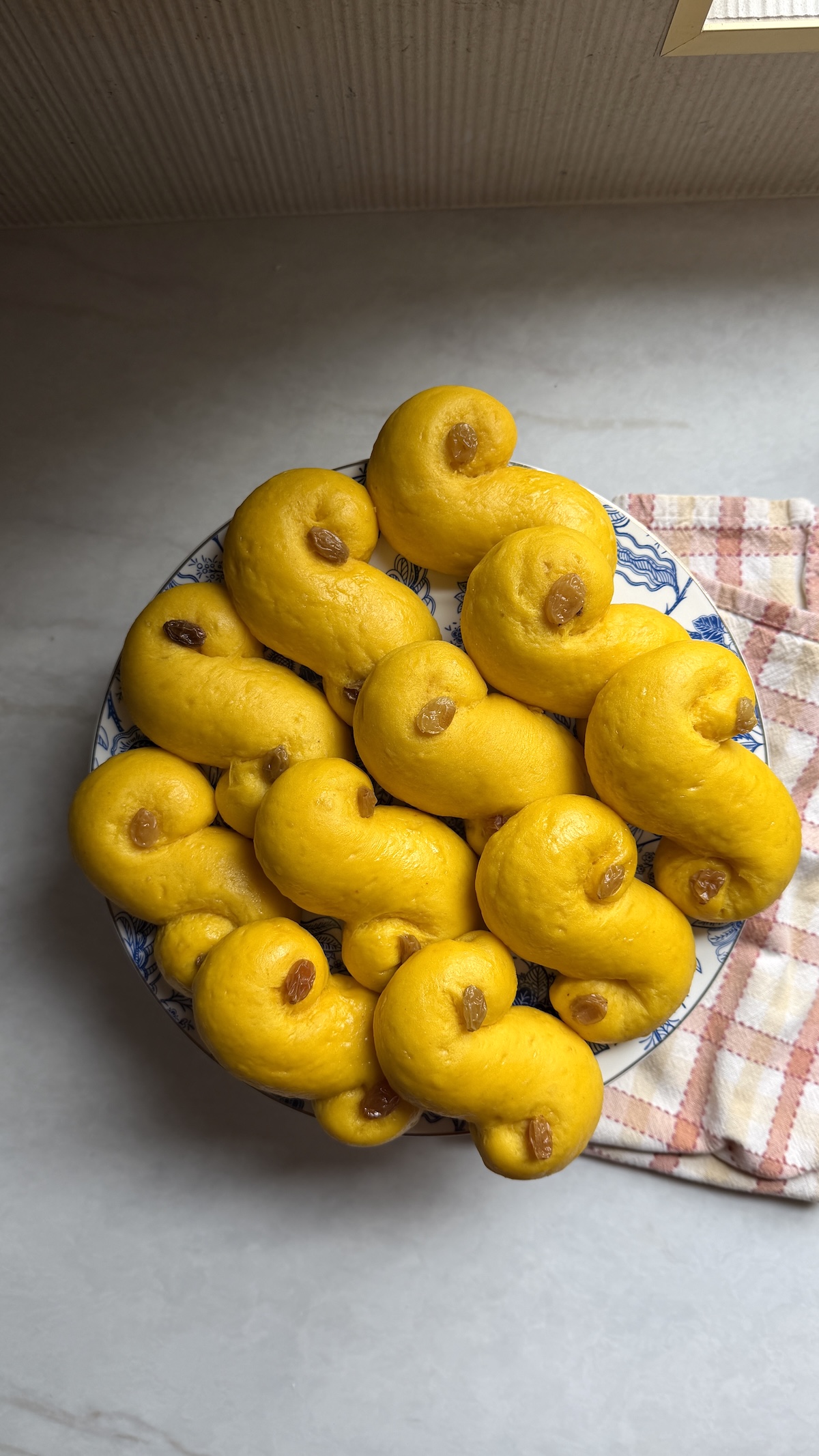
Lussekatter are soft, golden saffron buns that Swedes bake all through Advent, especially for St. Lucia Day on December 13. My version is based on Arla’s old-fashioned lussekatter, a classic Swedish home recipe with no quark.
The secret is real saffron, ground to a powder, plus a hot and quick bake. That’s what keeps them deep yellow, soft and full of saffron flavor.
How to make them
1. Grind and steep the saffron. Grind the saffron threads with 1 teaspoon of sugar in a mortar and pestle until it’s a fine powder. The sugar crystals help break the threads down, so you get an even yellow with no red streaks.
Transfer the saffron powder to a small bowl, stir in the rum, cover, and let it steep for at least 30 minutes. I let mine steep overnight at room temperature.
I used Bacardi Gold because that’s what we had, but vodka, cognac or even boiling water work too.
Don’t worry, you won’t really taste the rum! Think of it like vanilla extract, except it’s saffron.
Saffron quality matters a LOT. I used a high quality saffron, so the flavor came through strong and SO nice.
I can’t vouch for how a cheaper saffron will taste. If you go that route, steeping it in alcohol for longer should help the flavor come through.
High quality saffron can be pricey, but it’s worth it for a bread this good. Plus, this recipe makes a LOT of buns!
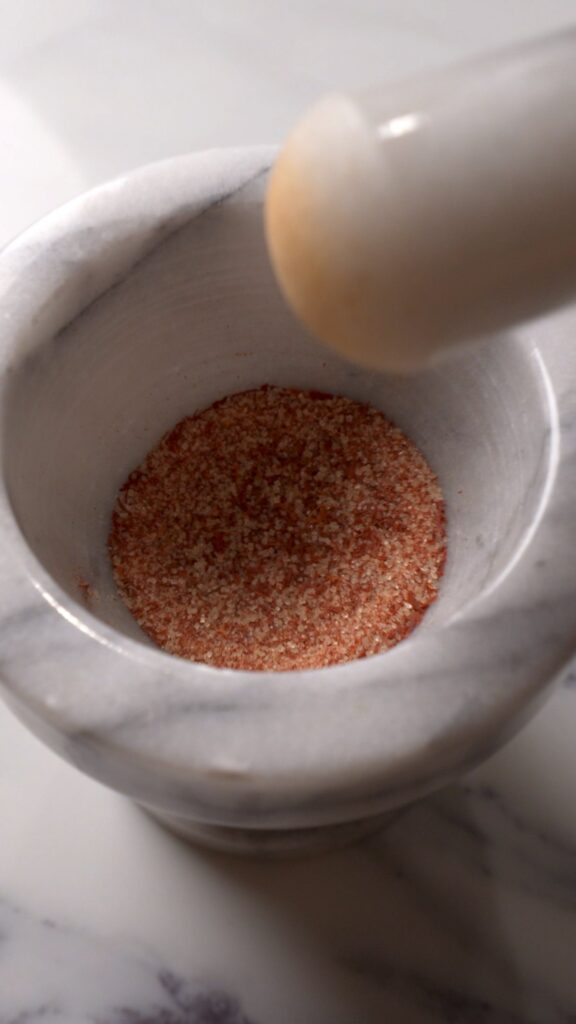
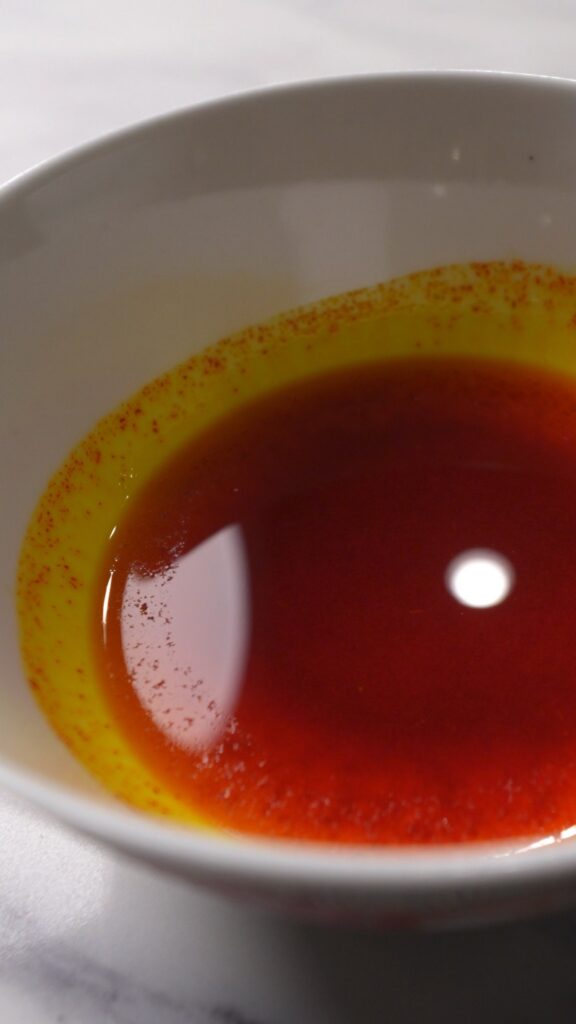
2. Make the dough. I use a stand mixer since this is a pretty soft dough. Add the saffron mixture, cold milk and egg to the bowl first, swirling a little of the milk around the saffron bowl so none gets left behind.
Then mix in the flour, yeast, sugar and salt.
Knead until the dough is very smooth and passes the windowpane test. Kneading time will vary depending on your mixer and how warm your ingredients are.
It will seem really, really sticky and tacky at first. The longer you knead, the more it comes together into one ball that sticks to itself instead of your hands or the bowl.
Once it passes the windowpane test, knead in the room temperature butter a few pieces at a time until it’s fully worked in. I add the butter last because the dough gets smooth much faster without it.
Try not to keep adding flour. Apparently dry buns are the #1 complaint in Sweden, and too much flour is usually the cause.
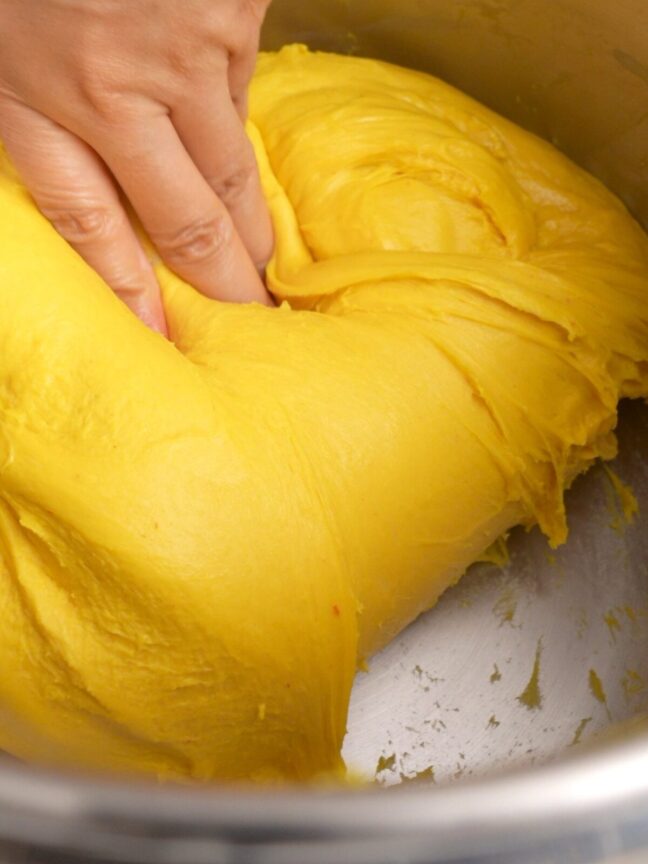
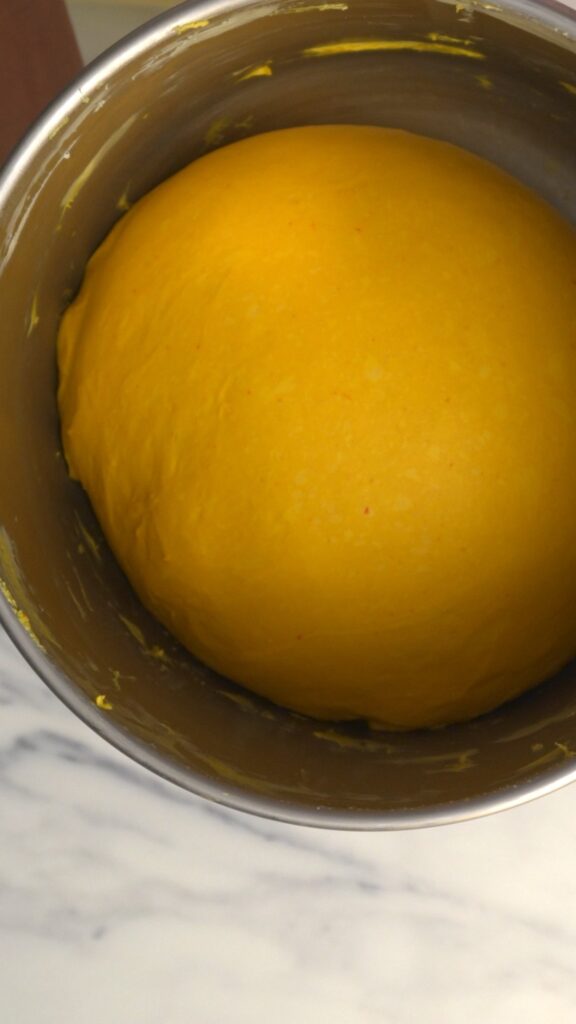
3. Let it rise. Cover the dough and let it rise until doubled in size, which may take an hour or longer depending on how warm your dough and kitchen are. Since the milk goes in cold, give it a little extra time.
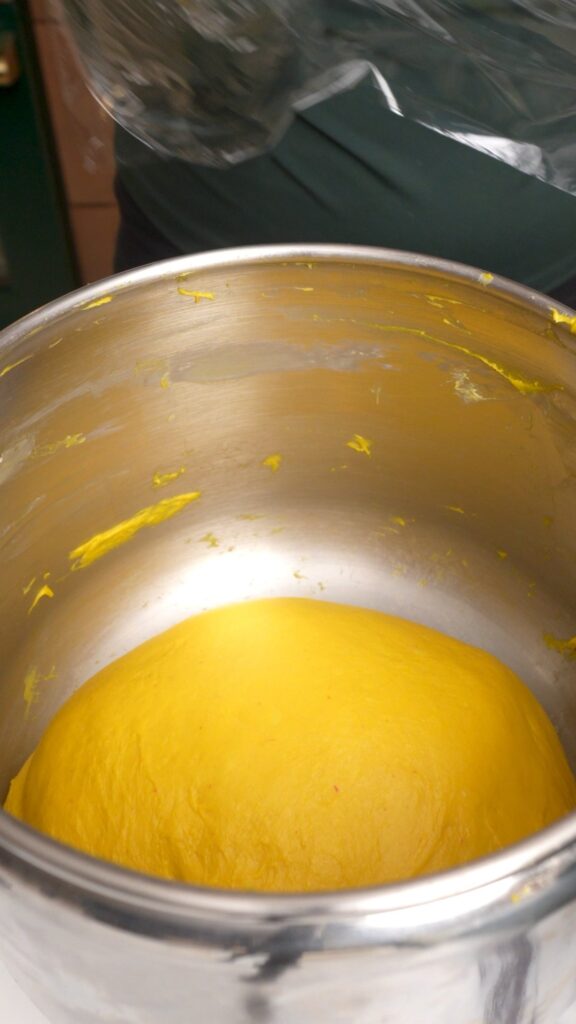
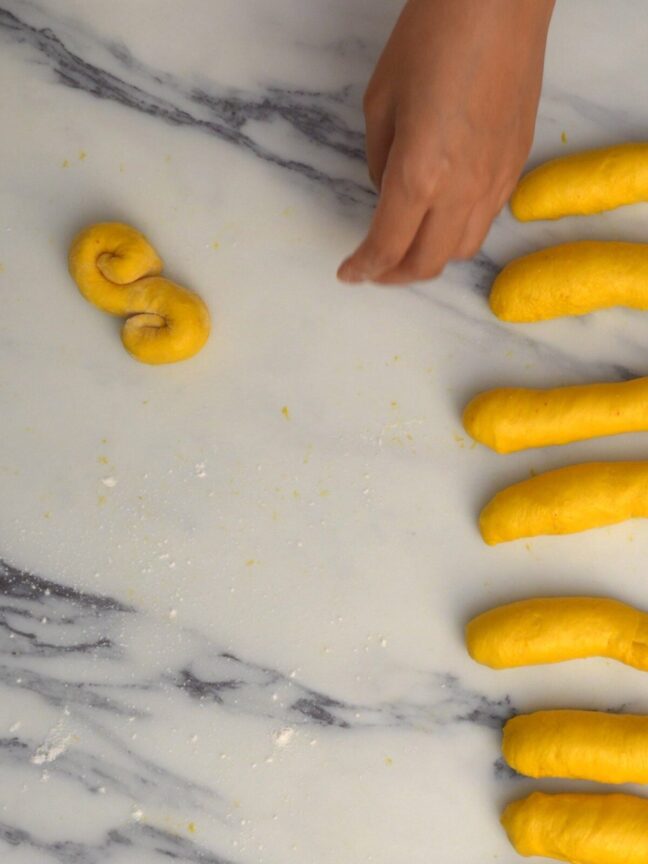
4. Shape the S’s. Punch the dough down, divide it into about 30 pieces, and roll each one into a rope. Curl both ends in opposite directions to make a reversed S.
5. Second rise. Cover the buns and let them rise until the dough springs back only halfway when you poke it, usually about 45 to 60 minutes. Heat your oven to 435F while they rise.
6. Add the raisins. Brush the buns gently with egg wash, then press a raisin into the center of each curl. Push them DEEP, all the way down to the tray, or they’ll pop out in the oven.
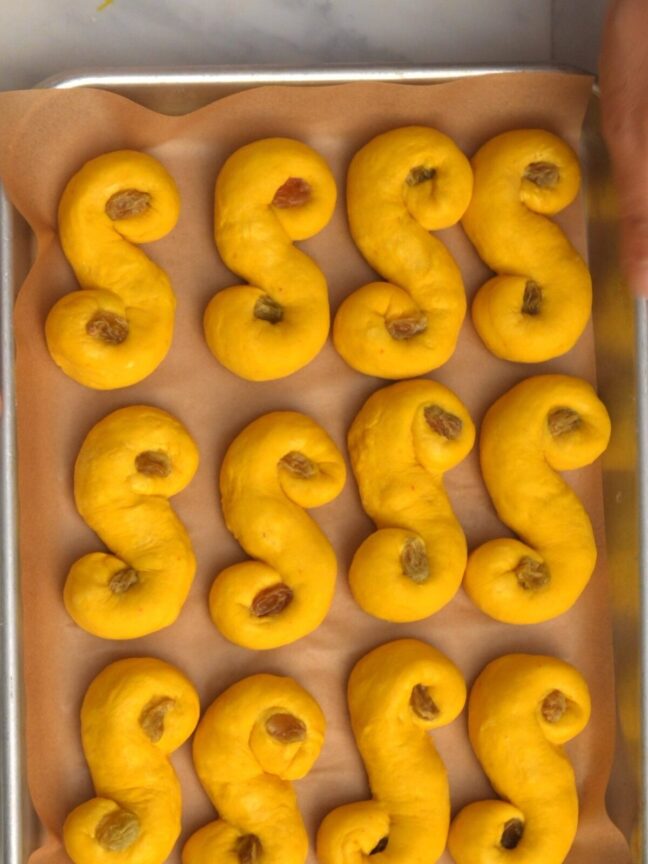
7. Bake hot and fast. Bake one tray at a time for about 7 to 9 minutes, just until golden with lightly browned bottoms. Extra time in the oven only dries them out, so pull them as soon as they’re done.
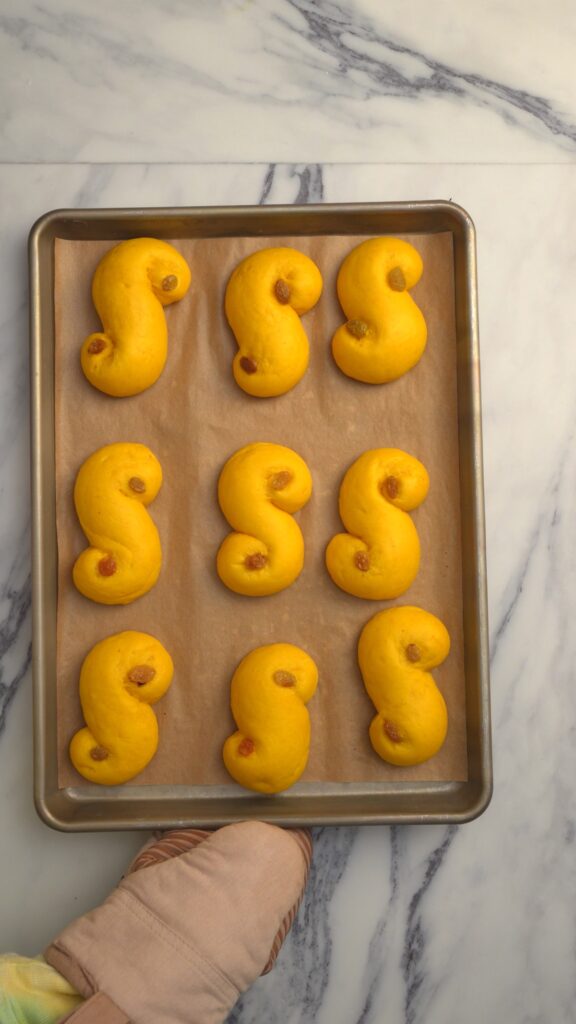
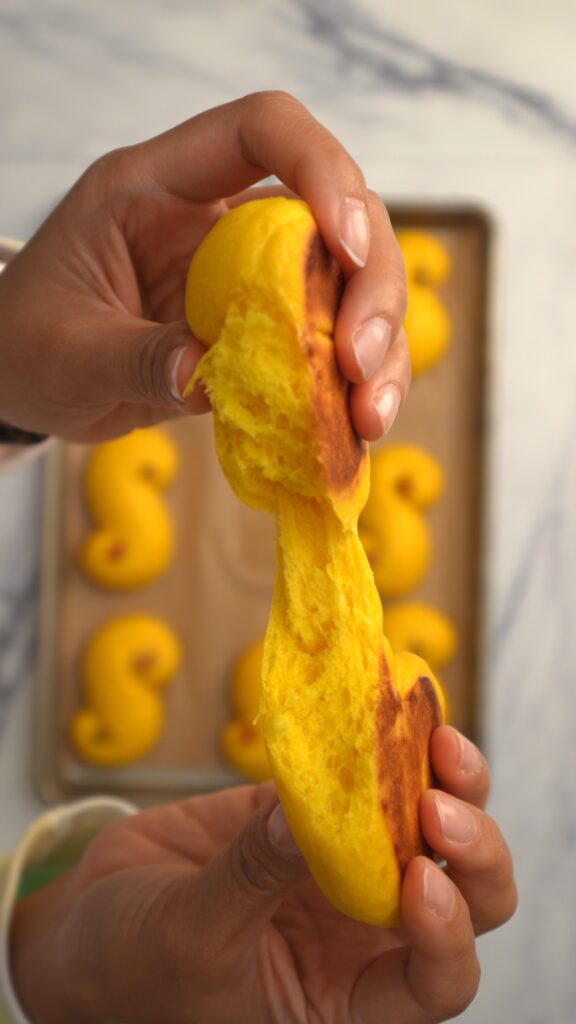
They’ll still look pretty pale when you pull them out, which honestly bothered me at first. Trust the process! They’re cooked through, and that’s what keeps them pillowy and moist.
8. Cool under a towel. Cover the buns with a clean kitchen towel right away so they stay soft. They’re best eaten warm the same day!
Tips
- Weigh your flour: it’s the easiest way to avoid dry buns.
- Always grind the saffron: whole threads give less color and leave red streaks.
- Optional finish: some brush the warm buns with melted butter and dip them in sugar.
More recipes to try
- Ensaymada, my family’s favorite sweet bread
- Pandesal, my most popular bread
- Coffee monkey bread, another great holiday bread
Recipe
Lussekatter (Swedish Saffron Buns)
Ingredients
Method
- Grind the saffron with the 1 teaspoon of sugar to a fine powder in a mortar and pestle. Transfer to a small bowl, stir in the rum, cover, and let it steep for at least 30 minutes, or overnight at room temperature.
- Soak the raisins in warm water while the saffron steeps, then drain and pat dry.
- In a stand mixer, add the saffron mixture, cold milk and egg, rinsing the saffron bowl with a little of the milk. Add the flour, yeast, sugar and salt, and mix until a shaggy dough forms.
- Knead until very smooth and the dough passes the windowpane test. It will be very sticky at first but comes together into one ball as you knead. Then add the butter a few pieces at a time and knead until fully worked in.
- Cover and let rise until doubled in size, which may take an hour or longer depending on how warm your dough and kitchen are.
- Punch the dough down and divide it into about 30 pieces. Roll each into a 6 to 8 inch rope and curl both ends in opposite directions into a reversed S. Place on parchment-lined baking sheets.
- Cover and let rise until the dough springs back only halfway when poked, usually about 45 to 60 minutes. Heat the oven to 435°F (225°C), not convection.
- Brush gently with the egg and milk, then press one raisin deep into the center of each curl, all the way down to the tray.
- Bake one tray at a time on the middle rack until just golden with lightly browned bottoms, about 7 to 9 minutes.
- Cool under a clean kitchen towel. Serve warm.
Notes
- Based on: Arla’s “Gammaldags lussekatter” (old-fashioned lussekatter). Grinding the saffron with sugar comes from the Västsverige recipe, and soaking the raisins comes from SVT baker Susanne Jonsson.
- Salt: 6g is 1 teaspoon of fine salt. If you use Diamond Crystal kosher salt, use about 2 teaspoons.
- Yeast: Swedes bake with about 50g of fresh yeast for this batch.
Equipment
Ozeri Food Scale
Especially with baking, a food scale is extremely helpful as it measures weight, not volume, which is more accurate. You should use weight measurements if a recipe provides them.
KitchenAid Stand Mixer
I absolutely LOVE my tilt head stand mixer. I can’t imagine baking without it.
USA Pan Baking Sheets
USA Pan makes some of the highest quality baking sheets.
Parchment Paper for Baking
These parchment paper sheets are offered in many different sizes to fit your pans.
FAQ
Usually it’s too much flour or too long in the oven. Weigh your flour, keep the dough soft, and pull the buns as soon as they’re just golden.
Yes, use a tablespoon of boiling water instead.
Not really! It works like vanilla extract, except it’s carrying the saffron flavor instead.
Yes, a lot. I used a high quality saffron, and the flavor is strong and so nice.
I can’t vouch for cheaper saffron. If you use one, steep it in alcohol for longer, like overnight, to help the flavor come through.
Yes, just skip the grinding step. Buy it from a reputable source, since cheap ground saffron can be cut with fillers.
They’re best the day they’re baked. Freeze any extras that same day, then warm them in the microwave for a few seconds.
The popular story is that they started as “devil’s cats,” and the saffron’s sunny color kept the devil away. Food historians trace the name to a Dutch midwinter bread called duivekater, so the devil story may just be folklore.